What do fruit AI videos have to do with water waste? More than most viewers realize. Behind this Artificial Intelligence (AI) trend lies a growing global concern: the massive amounts of water wasted to power these systems. How could an AI-generated TikTok video pose such a threat to the planet’s largest natural resource? The answer is overheated data centers. AI relies on significant amounts of water to cool its working data systems. As trends like these videos gain popularity, the environmental impact becomes increasingly significant.
“The fruit videos are really interesting to watch, and they’re just so entertaining,” Lia Sandoval said. “If I’m scrolling and everything is really boring and I come across a fruit video, I’m going to watch the whole thing. They sort of stand out because you are used to seeing normal people talking on your phone, and then all of a sudden you scroll to see colorful fruit people talking instead.”
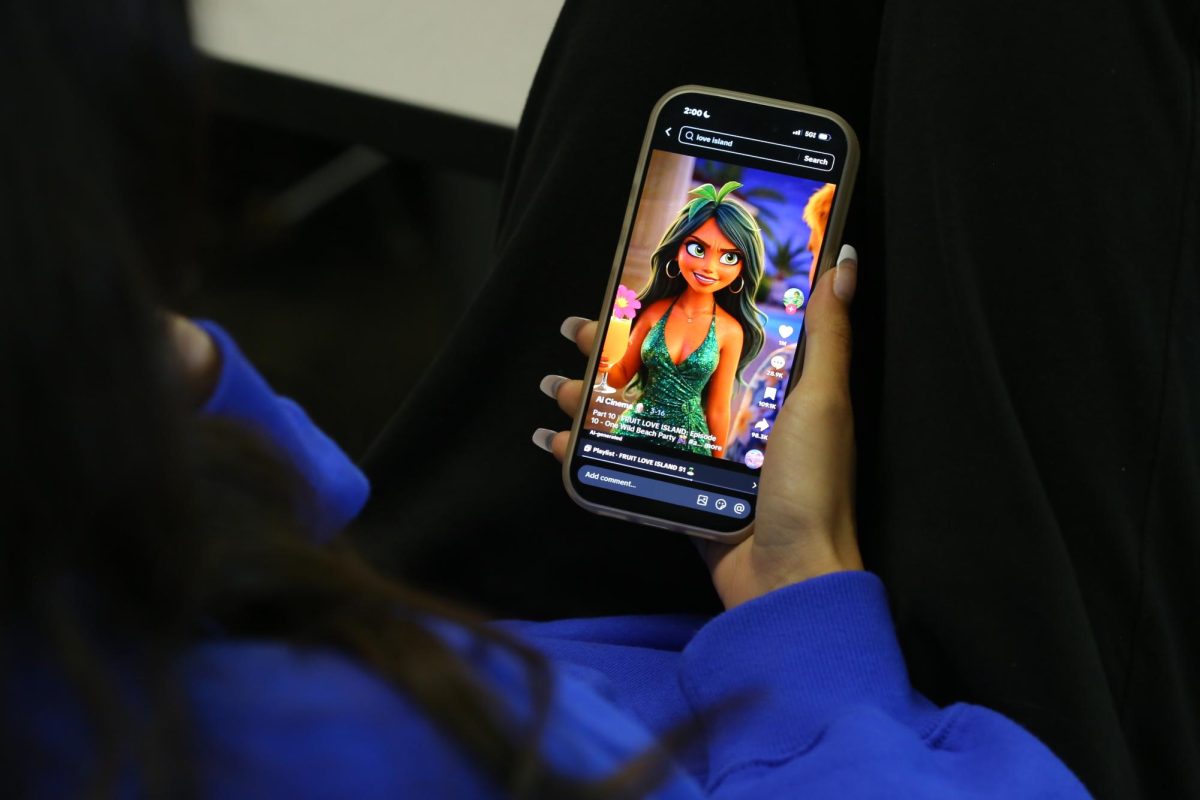
The first episode was released March 13, produced under the TikTok account ai.cinema021. The series is a play on the Netflix dating show “Love Island,” consisting of 22 total episodes. Like the real show, the AI fruit version developed characters such as Strawberrina (a strawberry woman), Bananito (a banana man) and other fruit people that compete to stay on the island by coupling up with each other. In addition, the AI-generated version has relationship drama, fights and breakups that keep the viewers engaged. However, due to rising awareness on the amount of water wasted by generative AI, the account ai.cinema021 revealed that several episodes were taken down and production had stopped March 28.
“I think that in life today, AI is found across every piece of social media platform, from being very obvious to sometimes being impossible to tell,” Max Amado said. “AI has a variety of benefits, including using it as a tool for learning but also for entertainment content like the fruit videos. I think every share adds to the popularity of trends like ‘Fruit Love Island,’ so people should know the drawbacks it has on the environment and be careful about their use of AI.”
With every use of Chat GPT, Google Gemini or any AI source, the data services that run them heat up. Because salt water can damage software, data centers often use freshwater to cool everything down. Some servers use up to millions of gallons of water per day just to cool the machines. In the United States, AI has a water footprint of around 800 billion liters of water. But AI cooling systems are not the only thing that requires gallons of water to operate. AI also needs immense amounts of electricity, often generated by thermal power plants. These power plants require the same freshwater for steam production, adding to the millions of gallons wasted daily on AI use.
“I was kind of surprised that they wouldn’t reuse the same water to cool off data centers. I feel like they could use other things other than water to keep it running and cooled off, but when an excessive amount of water is being used either way it’s a problem,” Sandoval said.
As AI continues to increase environmental concerns, students are beginning to notice. Adhya Balachandar is the club president of 350 Whitney, a chapter of the non-profit 350 Sacramento organization that works to decrease the amount of carbon dioxide in the atmosphere.
Balachandar said, “The more views AI videos get, the more they’re going to be produced, which means a huge waste of natural resources. I think high school students should try to limit their use of AI unless it’s absolutely necessary. I think it’s important for people to understand that AI does have an impact on the environment in a negative way, and so if they’re going to use it, they should be aware of the negative impacts it has.”
by LILA COMBS & SASHA SMITH